Neon Swim User Guide › Chapter 3
Chapter 3Tailor to different swimmers
One workout can hold different sets for different groups of swimmers, and different send-offs within a single set. Two features do that work. This chapter keeps them straight.
Subgroups and interval groups: which one do you need?
Two features solve two different problems. Subgroups split one workout into different sets. Interval groups vary one set for different abilities. Learn them apart, and the rest of this chapter is easy.
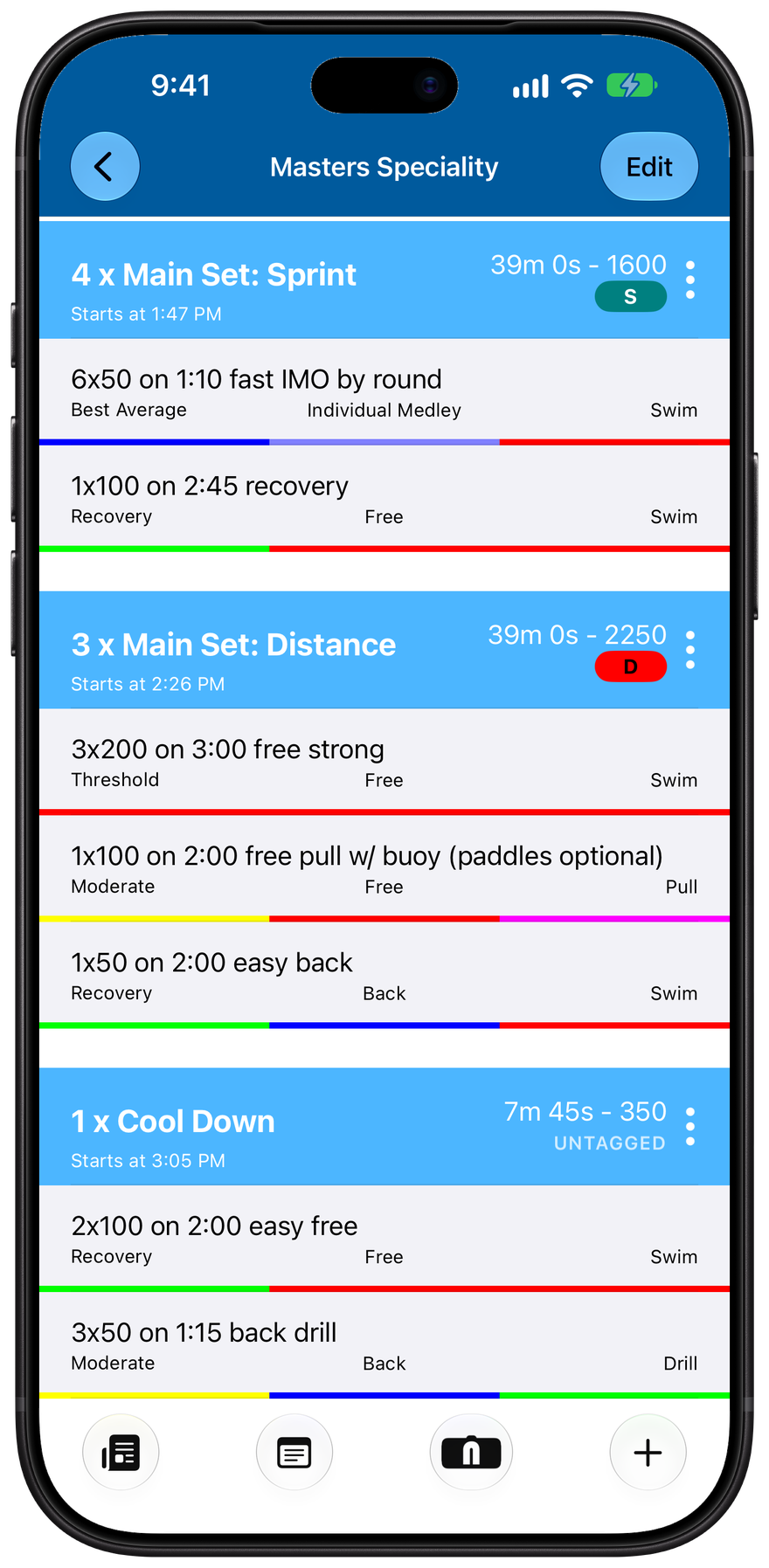
Subgroups: different sets
Subgroups route entirely different sets to different swimmers. In one workout, the Sprint group swims one main set and the Distance group swims another.
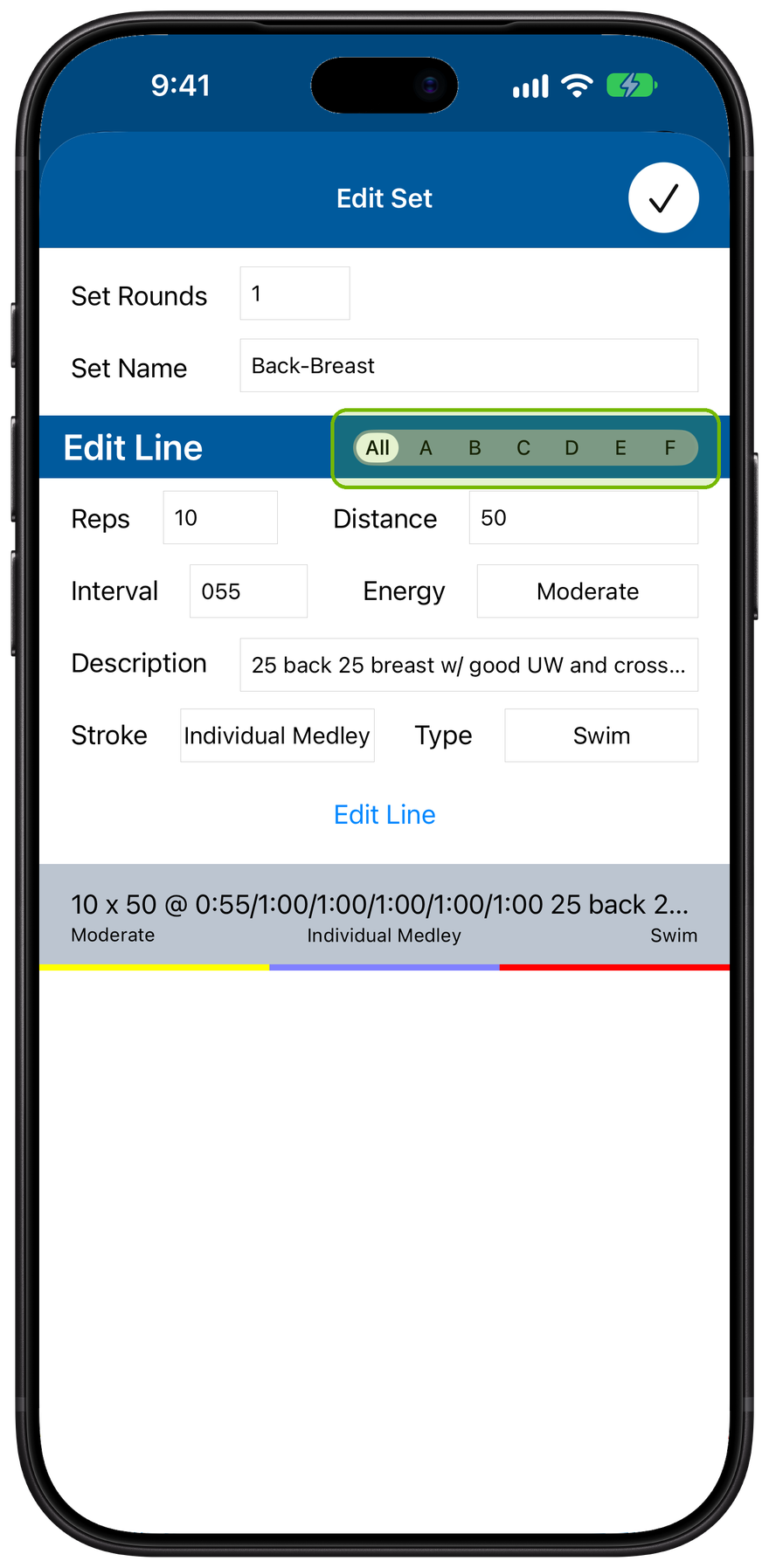
Interval groups: same set
Interval groups keep everyone on the same set, but give each ability level, A through F, its own interval, reps, or distance.
Set up your subgroups
A subgroup is a reusable label like Sprint or Distance. Build the list once in Settings, then add the ones you need to any workout.
Open the library
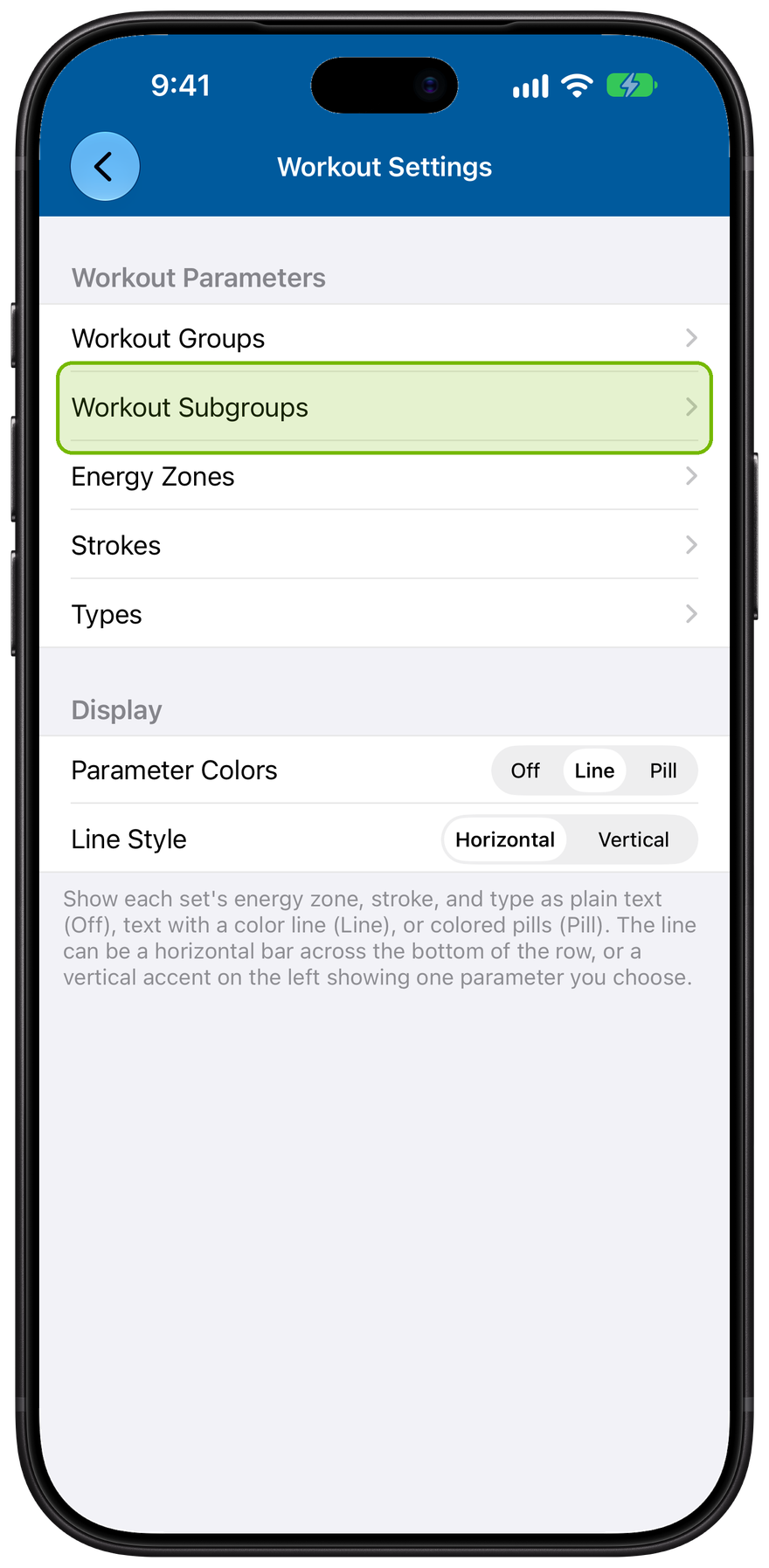
Your subgroups live in Settings, under Workouts. This is the one list every workout draws from.
Tap Workout Subgroups.
Name and code each one
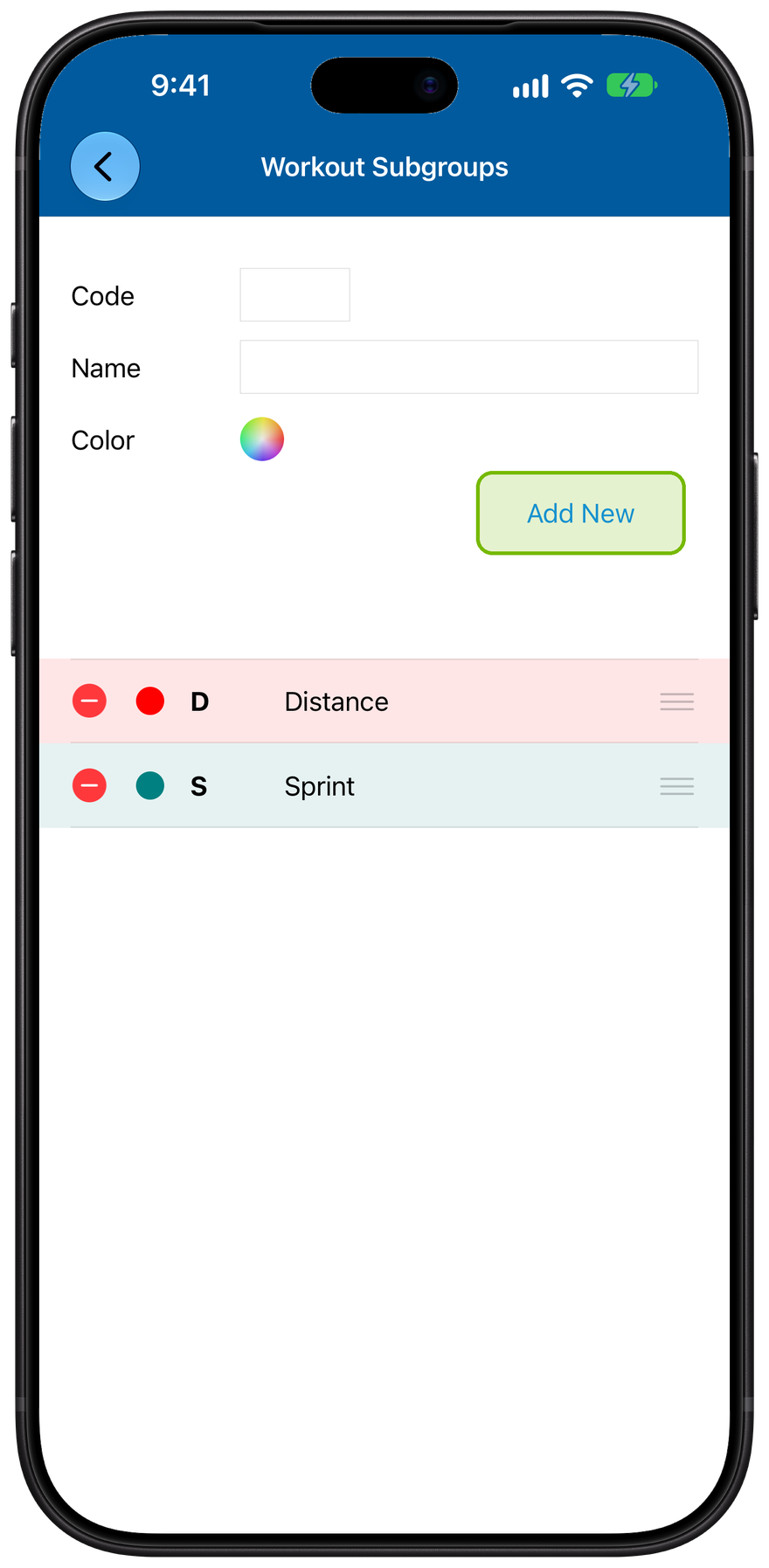
Neon ships with Distance and Sprint. Each one has a Name for menus, a short Code for its pill, and a color.
Tap Add New.
Add them to a workout
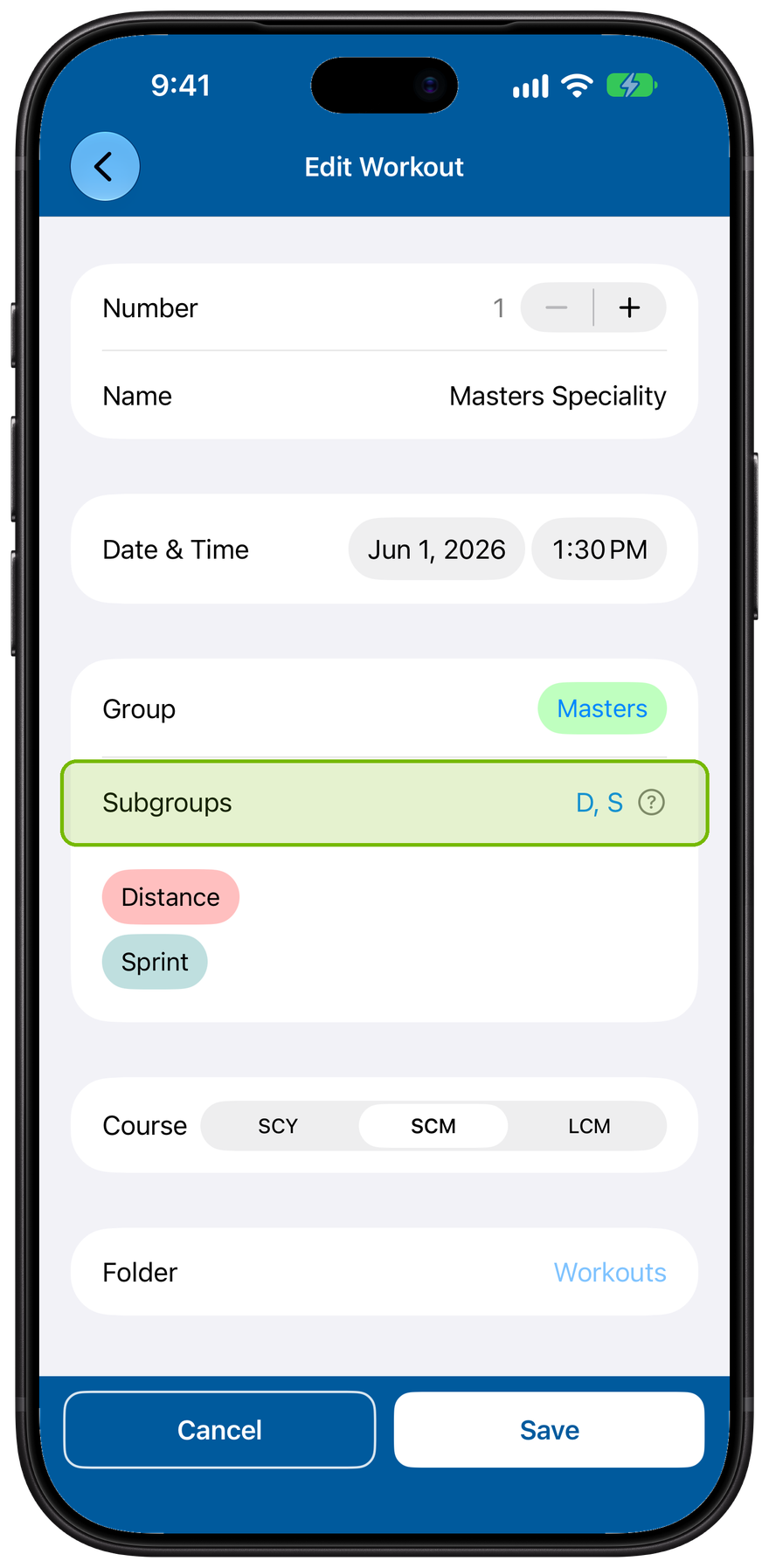
A subgroup does nothing until a workout uses it. Open a workout's Edit screen and open its Subgroups.
Tap Subgroups.
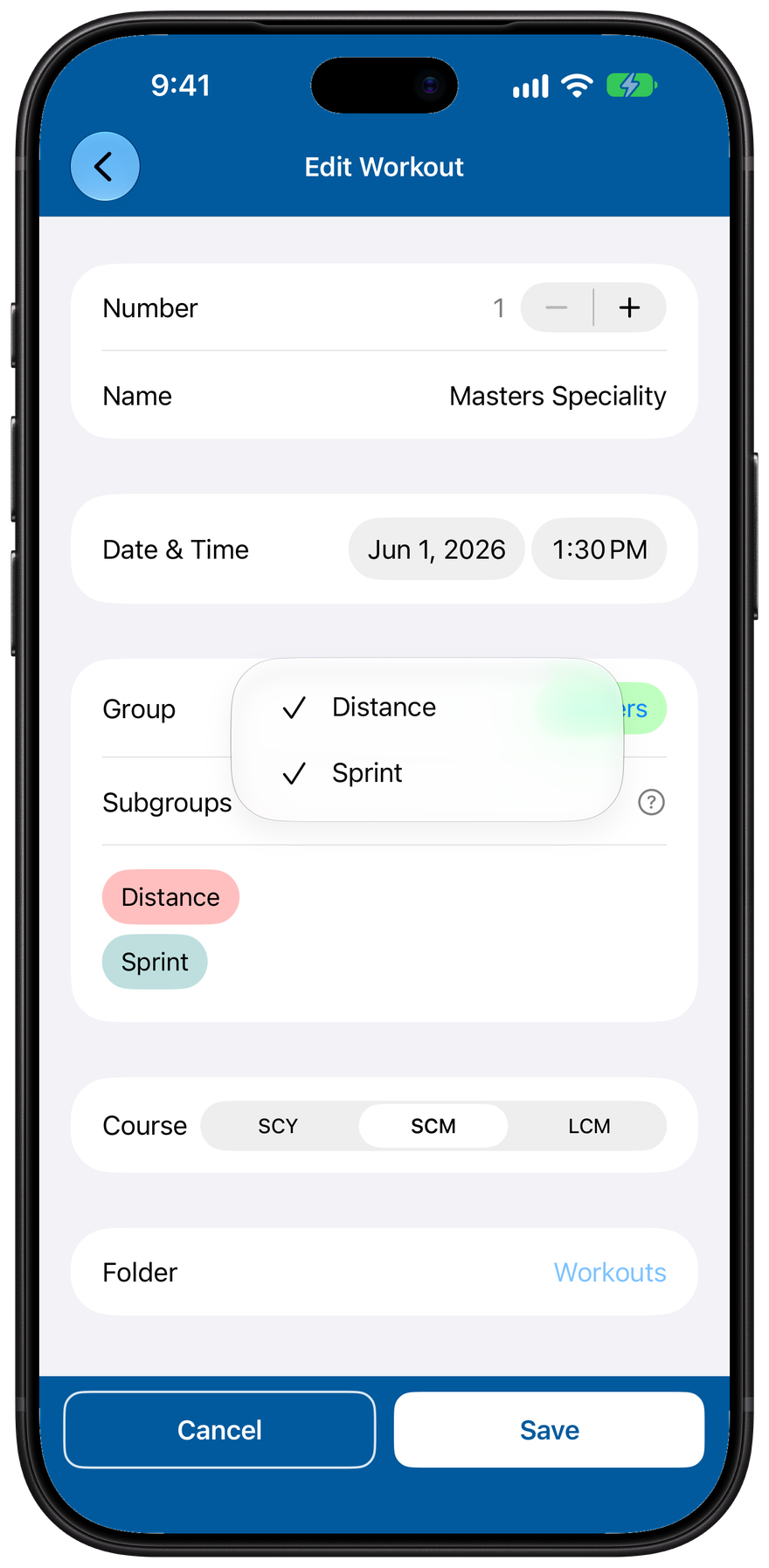
Pick this workout's groups
Check the subgroups this workout uses. That builds its roster and makes them available to tag. It tags no sets yet.
Tag sets to subgroups
Here is the routing itself. Every set is either tagged for certain subgroups, or left untagged for everyone. This is the concept that lets one shared workout split cleanly.
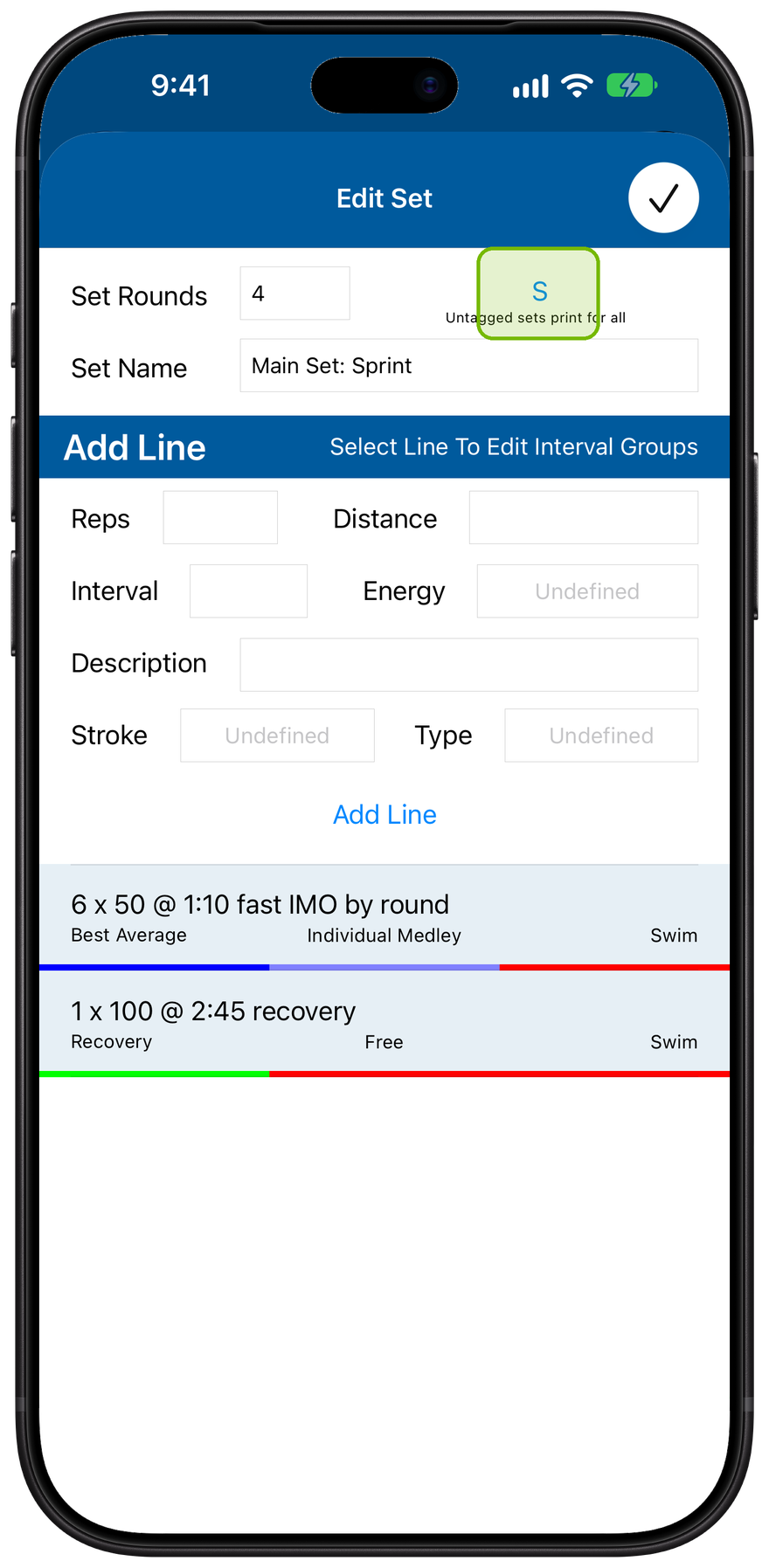
Open a set's tag
Every set has its own subgroup button. It shows the tagged codes, or Untagged when the set is for everyone.
Tap the button to change it.
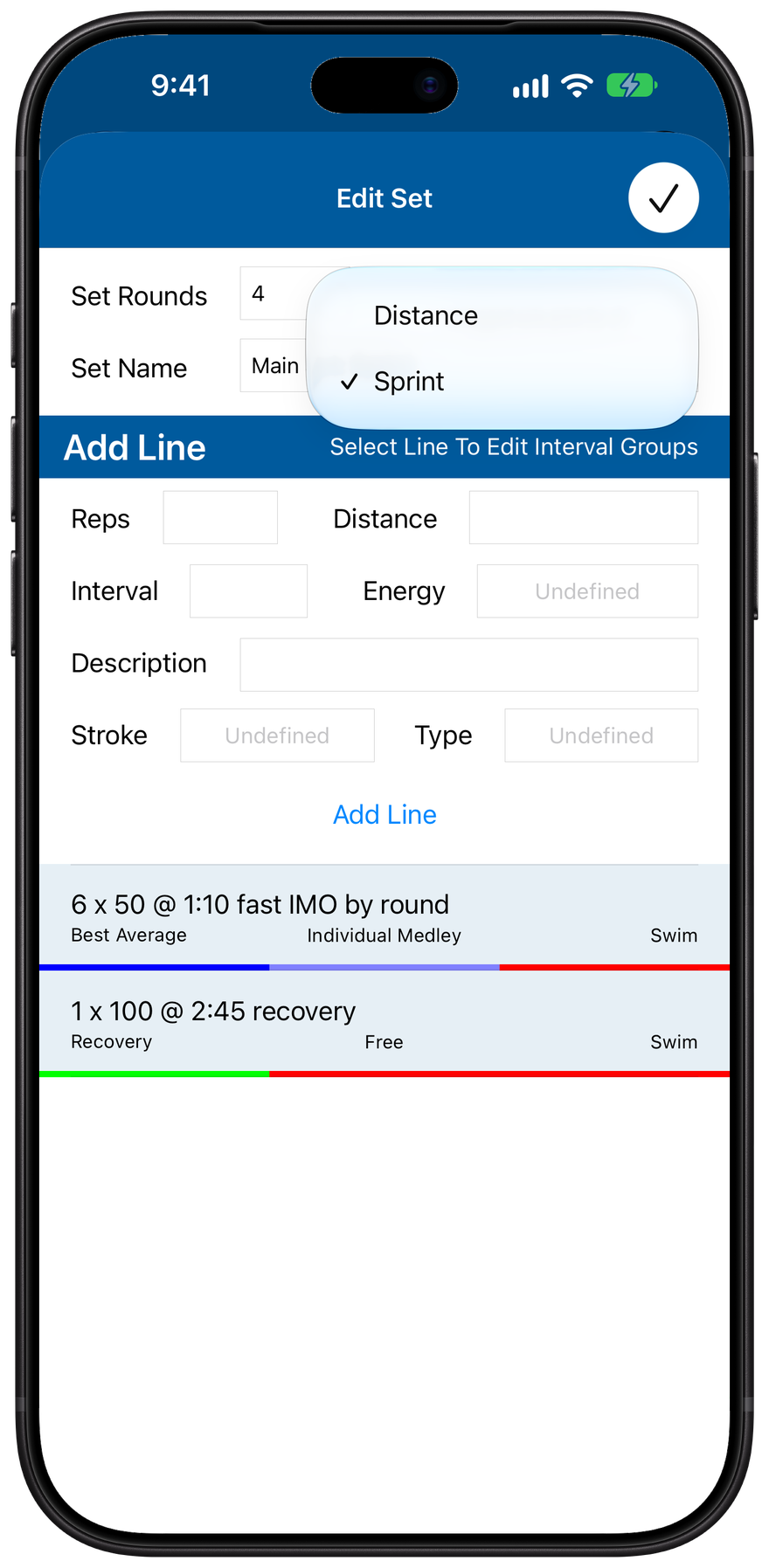
Choose who swims it
Check the subgroups this set is for. Untagged sets print for all; a tagged set prints only for the groups you check.
Read the headers
Back in the workout, each set header tells you at a glance: colored code pills for a tagged set, UNTAGGED for a shared one.
Change or remove a subgroup
Subgroups can be renamed, recoded, or retired. A couple of rules keep those edits from quietly breaking a workout.
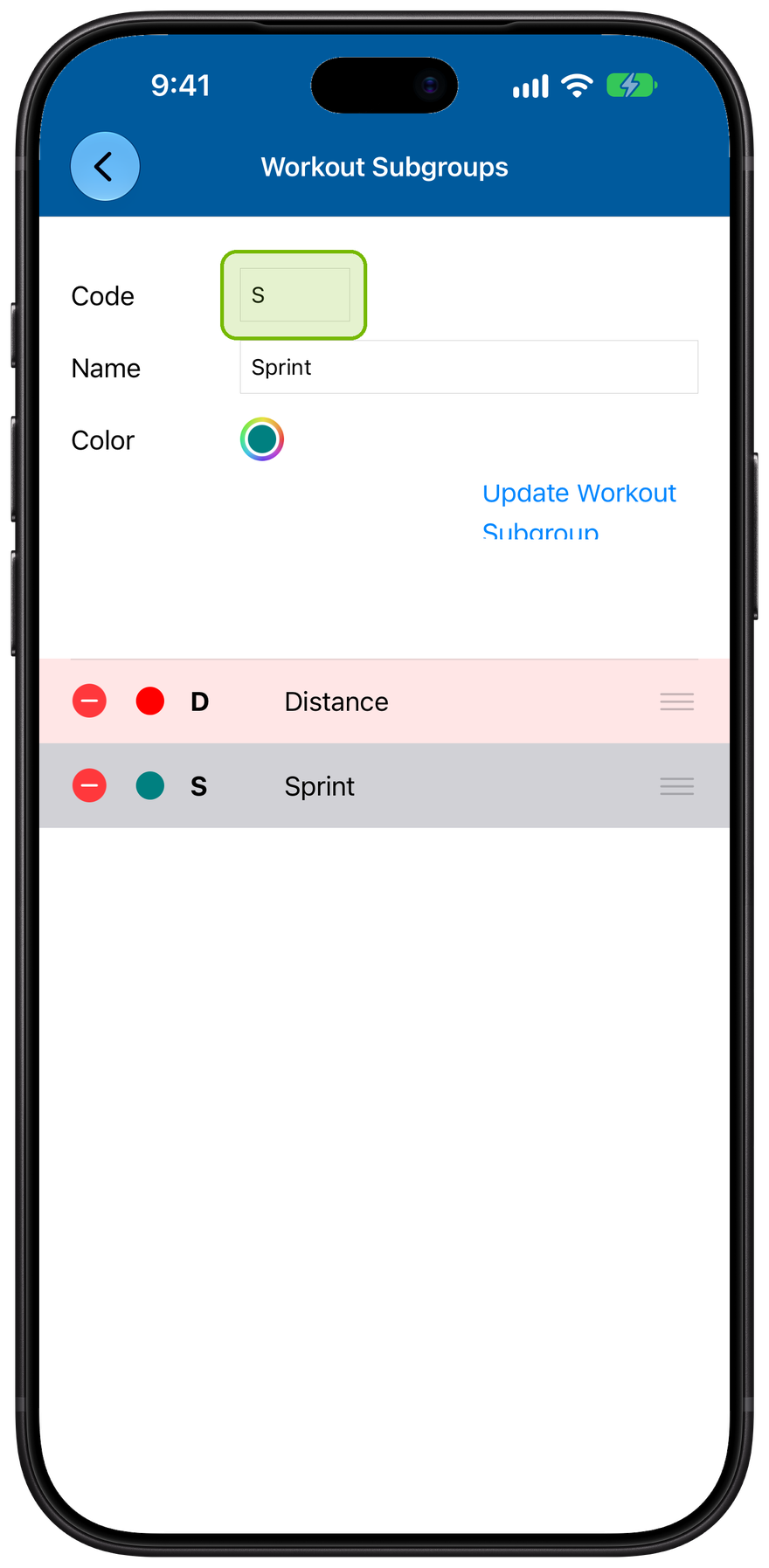
Name versus code
The Name shows in menus. The Code shows on the pill. To change what a coded subgroup's pill reads, edit its Code, not its Name.
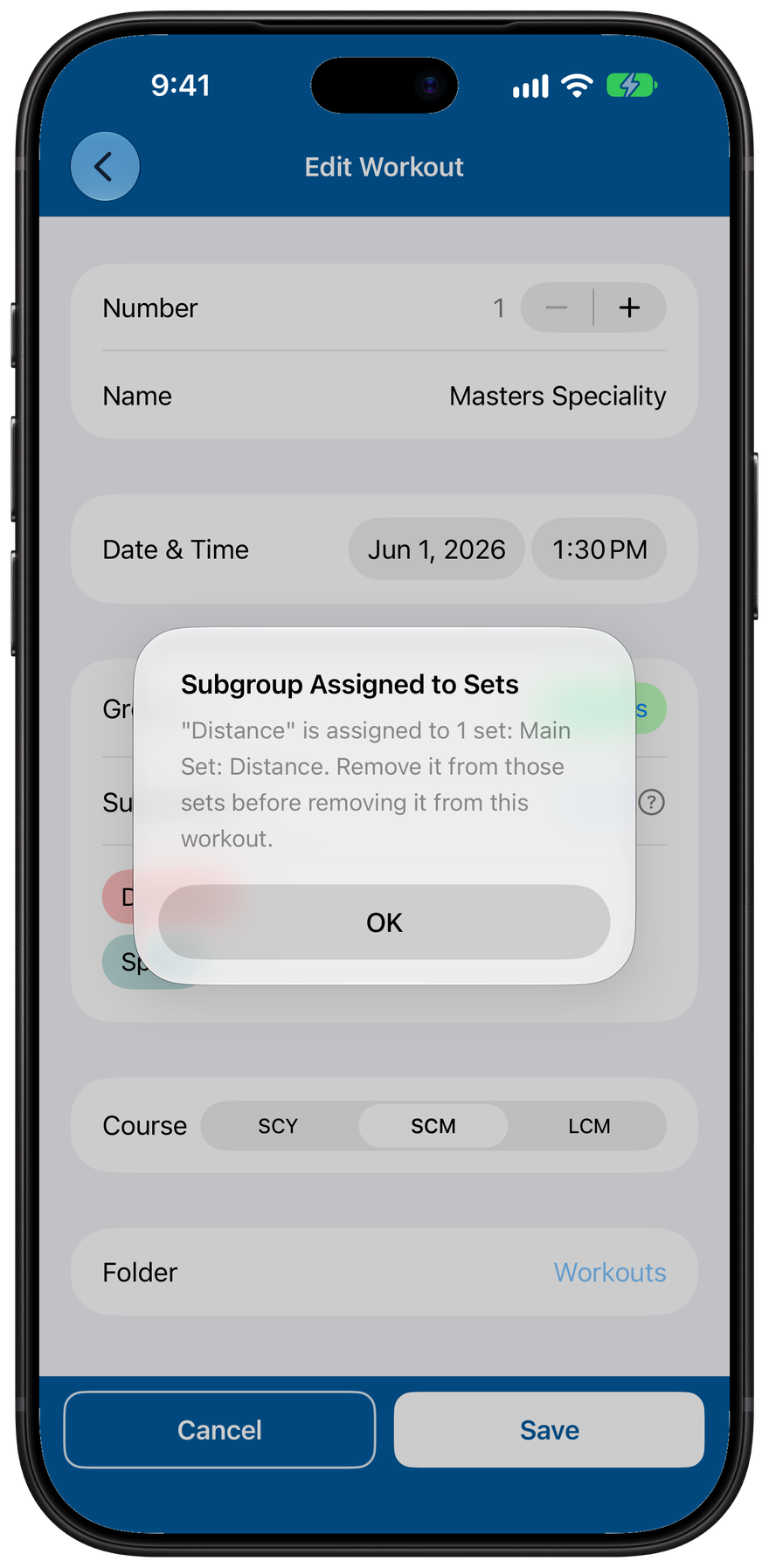
Removal is protected
Neon won't remove a subgroup while a set still uses it. It names the set and stops the save. Untag those sets first, then remove it.
Interval groups (A–F)
Interval groups are for swimmers who share a set but need different numbers. Each line holds up to six versions, A through F, and they map straight to your pace clocks.
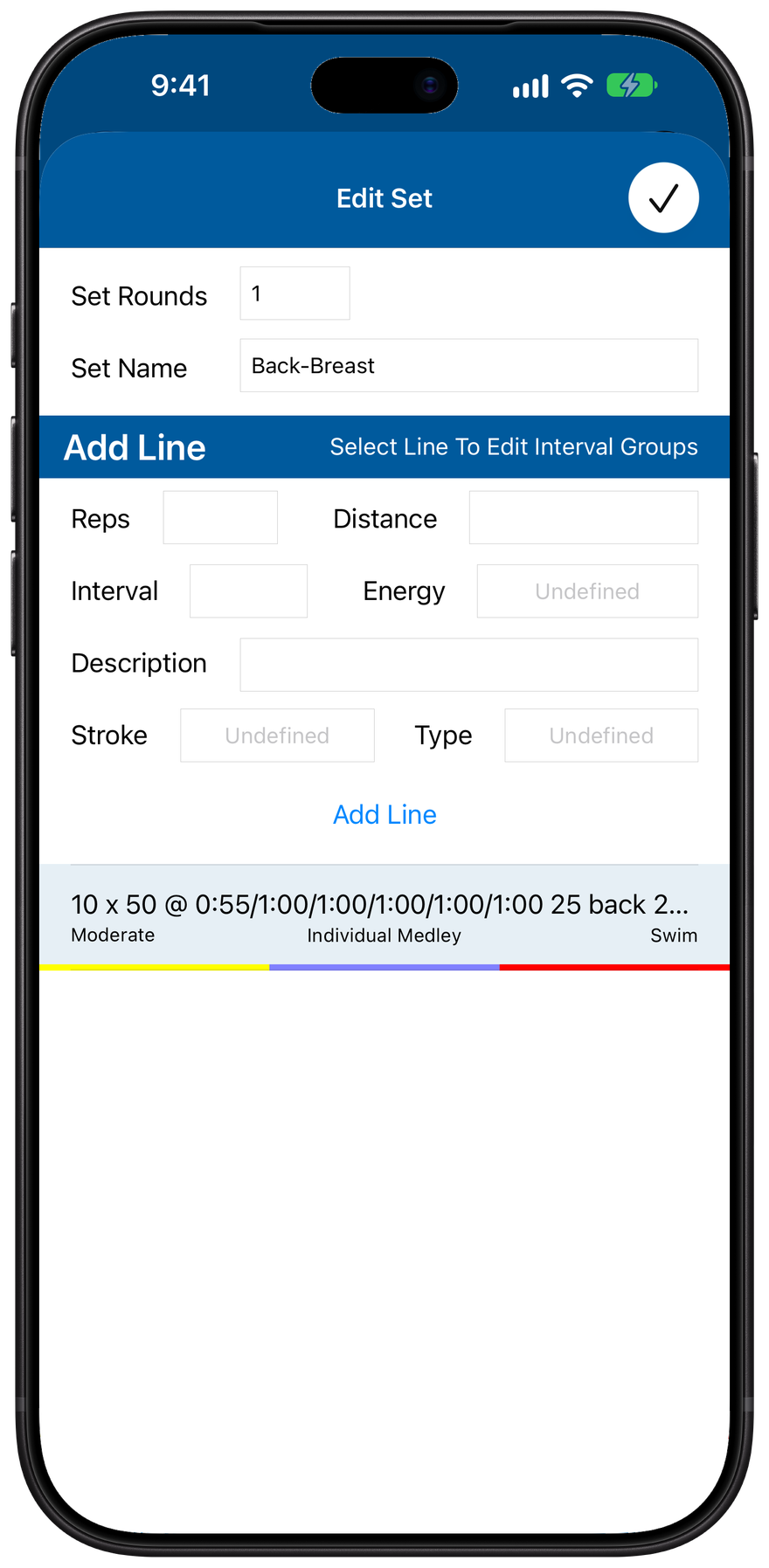
Six versions of a line
This one line carries six send-offs at once: 0:55 for group A, 1:00 for the rest. Reps, distance, and stroke can differ too.
Edit each group
Tap a line to show the A through F control. Reps, distance, interval, stroke, and more can each differ by group.
Pick a group to edit it.
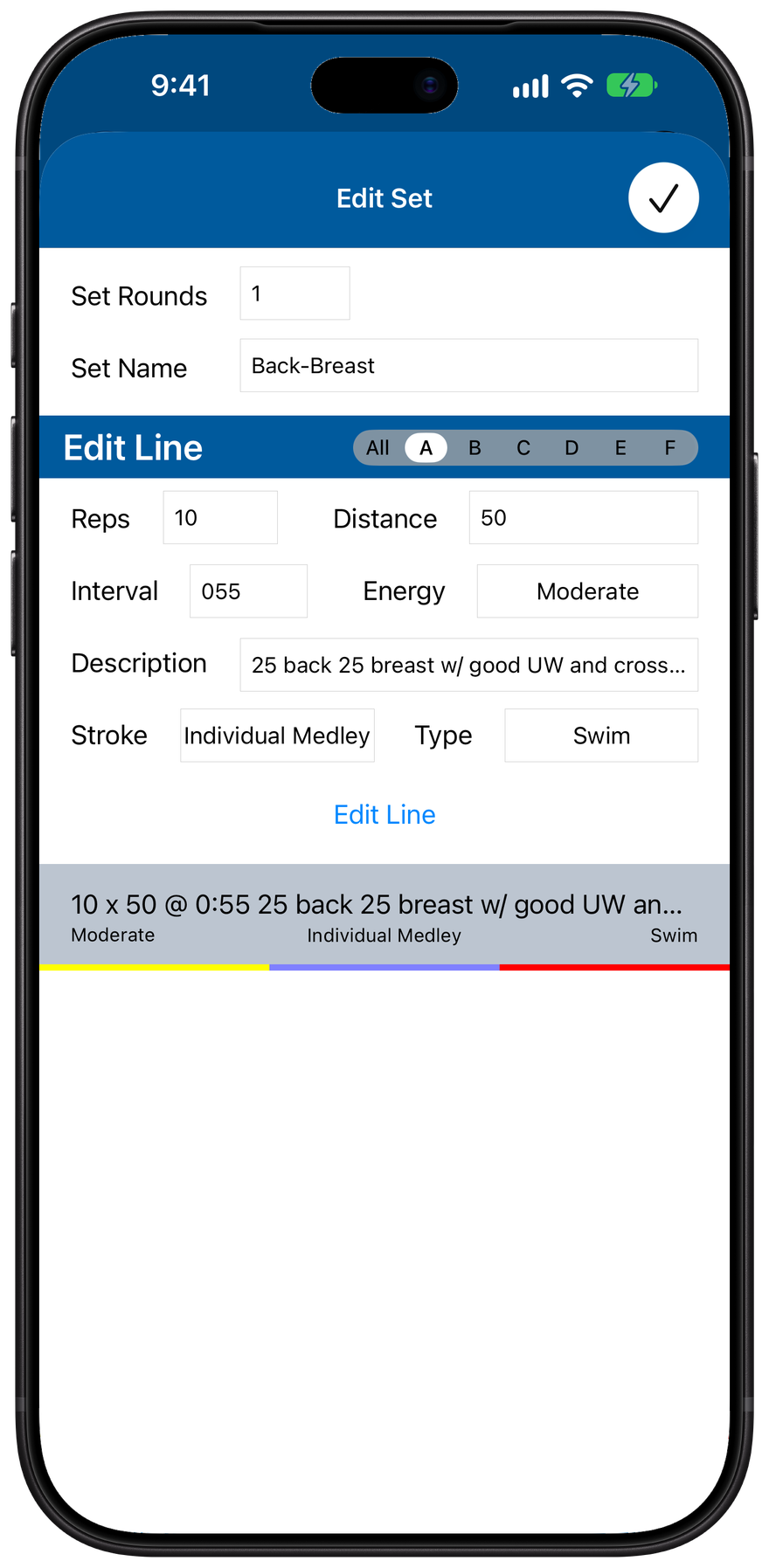
Group A on 0:55
Select group A and its line shows an interval of 0:55, the send-off for your fastest lane.
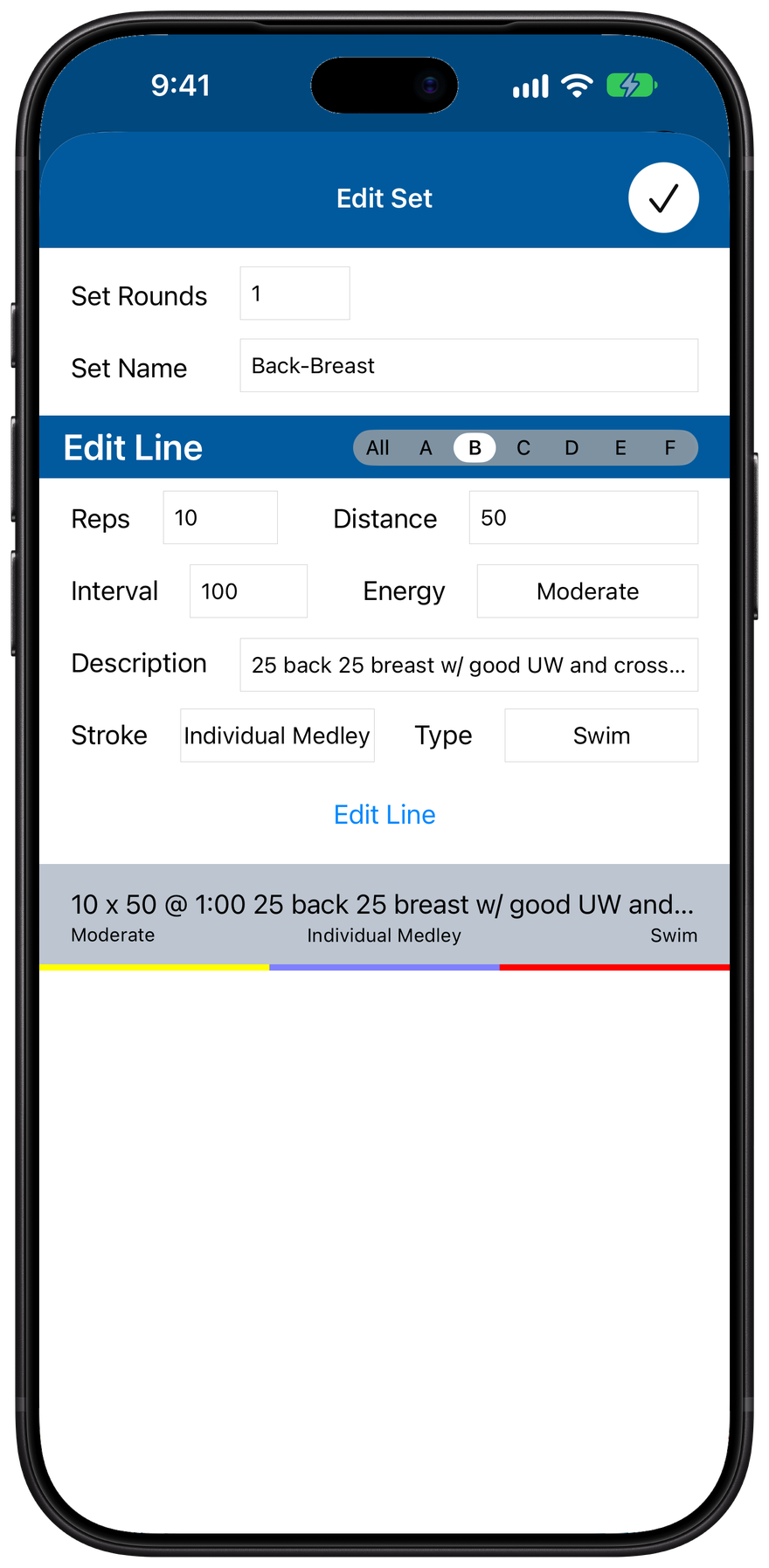
Group B on 1:00
Select group B and the same line shows 1:00. One line, one set, a different send-off per ability level.
Print tailored sheets for each group
This is the payoff. The Workout PDF can print one clean sheet per group, showing each swimmer only the sets and send-offs meant for them.
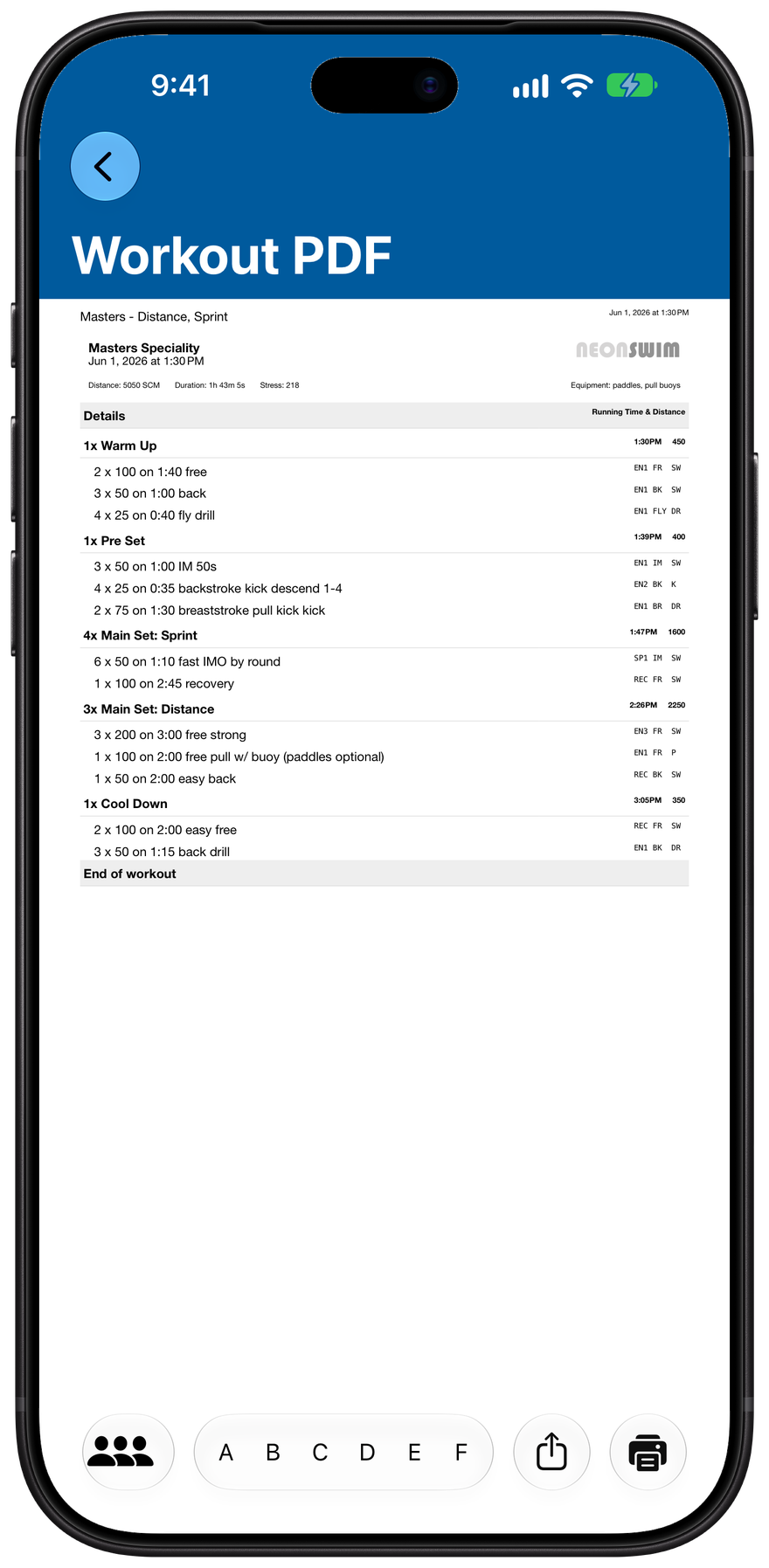
The master copy
By default the PDF shows every set, and its header lists the workout and all its groups. This is the full master copy.
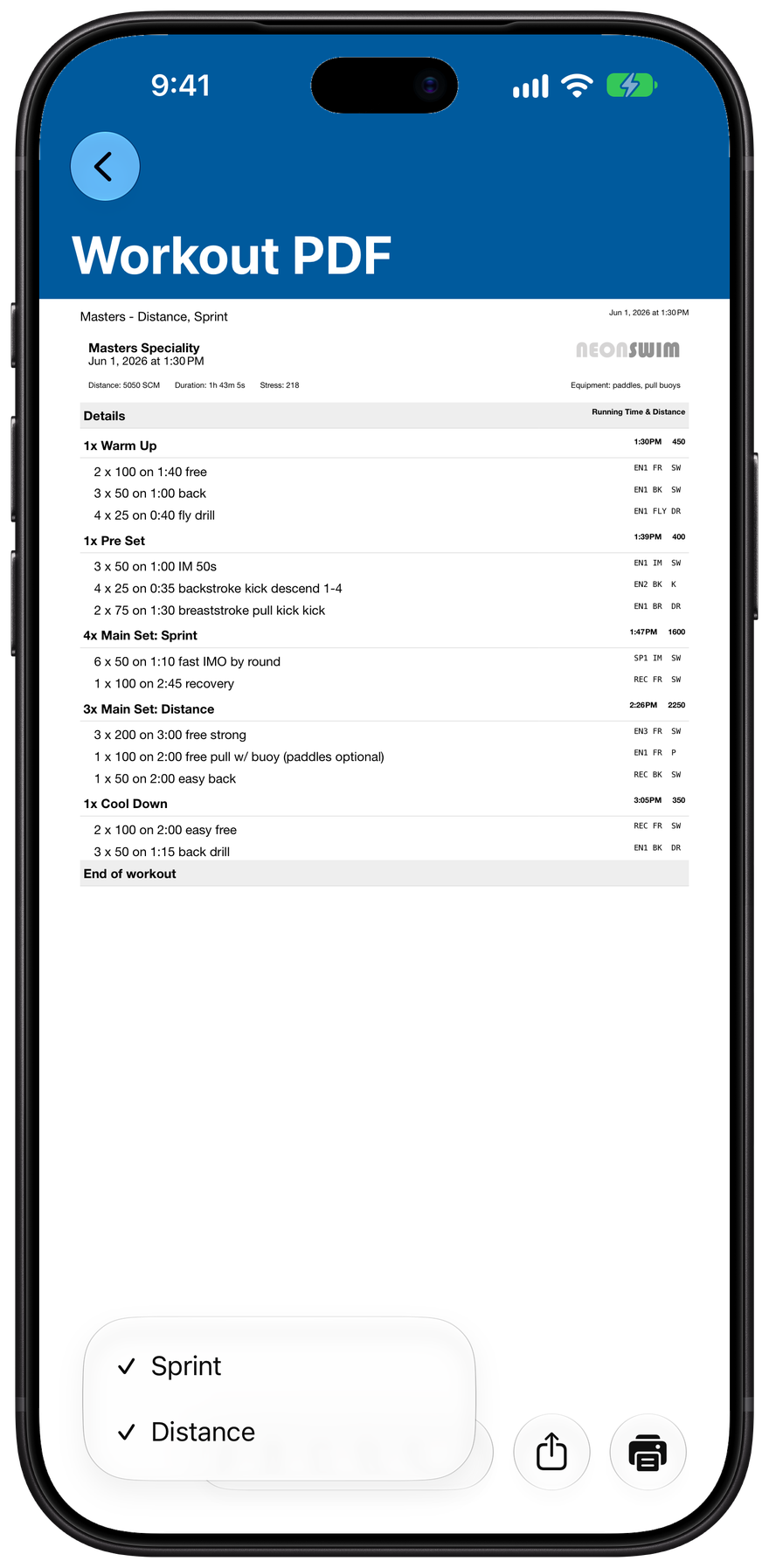
Filter by subgroup
Open the subgroup filter. It starts with every group checked. Uncheck groups to build a sheet for the ones that remain.
Tap the subgroup icon.
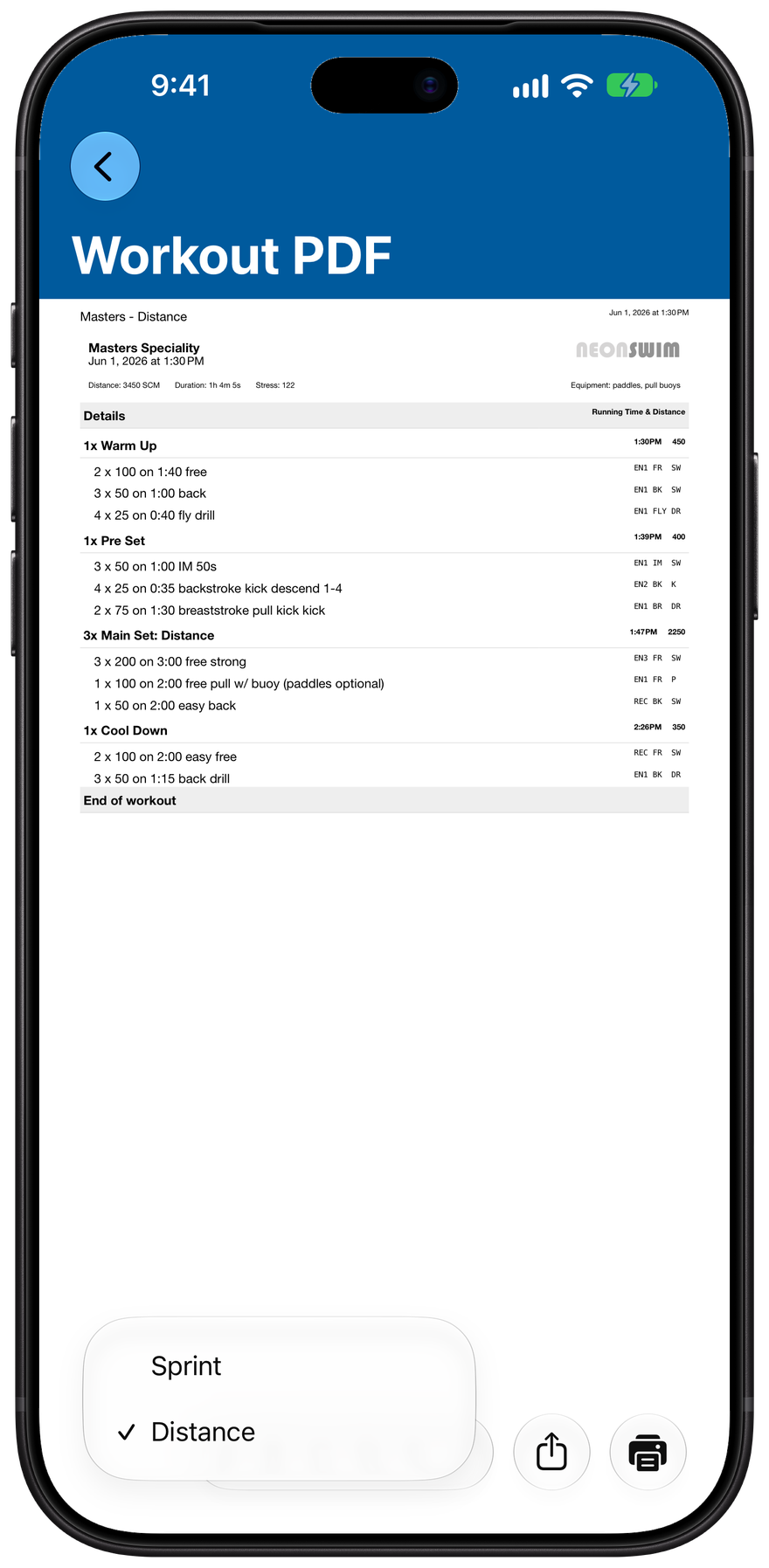
One group's sheet
Check only Distance and the sheet keeps every shared set plus the Distance main set. The Sprint set drops away.
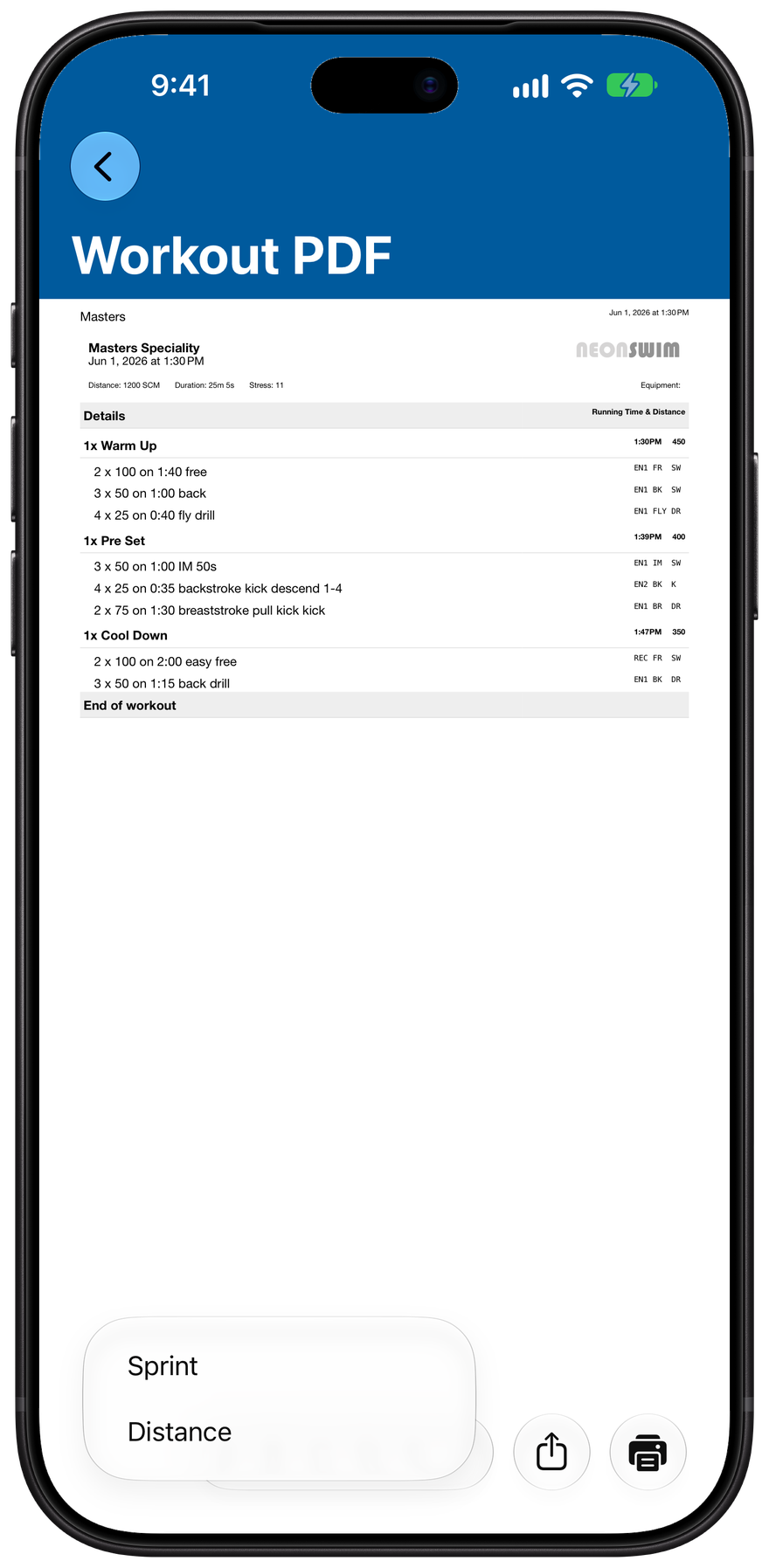
The shared sets
With no group checked, you get just the untagged sets everyone swims, not the whole workout.